Executive Summary
June 2026 marked an important transition in market leadership. AI remains the dominant long-term theme, but participation has begun to broaden beyond a narrow group of mega-cap technology names. Investors are increasingly looking across industrials, infrastructure, energy systems, resource producers, and cyclicals that may benefit from the second phase of the AI investment cycle — even as markets navigate inflation uncertainty, shifting rate expectations, and geopolitical tension.
The AI story itself is evolving. The first phase rewarded software platforms, semiconductor designers, and hyperscalers. The second phase increasingly rewards the physical systems that enable digital growth: power generation, transmission, energy storage, industrial automation, and critical materials. This broadening may prove healthier for markets — leadership becomes less concentrated and economic benefits more widely distributed.
The key question is no longer whether AI will transform the economy, but whether existing infrastructure can support the scale of transformation investors now expect.
Market Rotation Signals a New Phase
One of June’s most notable developments was a gradual improvement in market breadth. For much of the prior cycle, returns concentrated within a small group of technology leaders. Those companies still benefit from strong earnings and AI spending, but investors have started exploring a broader range of sectors — industrials, infrastructure providers, energy companies, and selected cyclicals.
This matters because healthy bull markets typically broaden over time. When expansion depends on only a handful of companies, fragility rises. Broader participation suggests investment spending is spreading through the real economy rather than staying concentrated in technology. The transition is early, but it is an important signal for long-term structural investors.
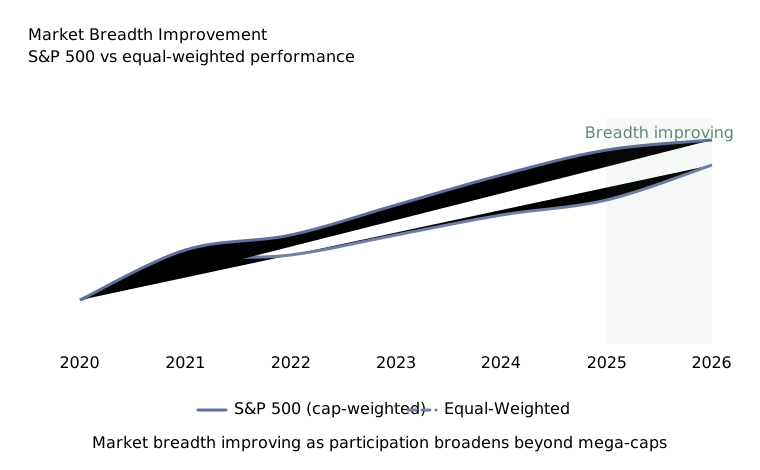
Market breadth improving as participation broadens beyond mega-caps
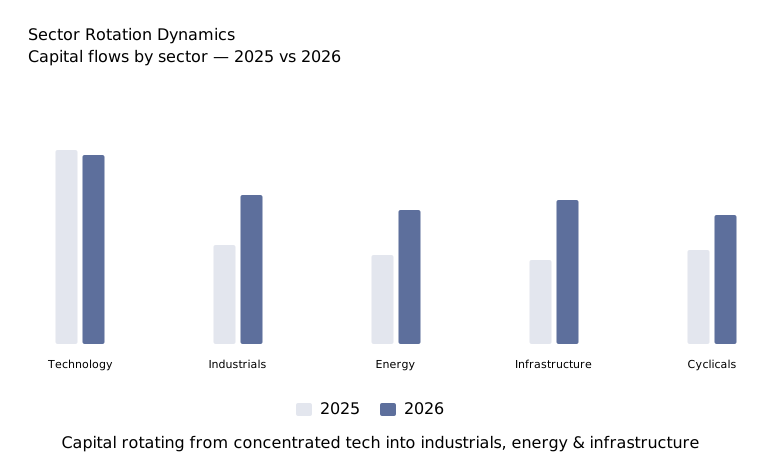
Capital rotating from concentrated tech into industrials, energy & infrastructure
The Infrastructure Economy
Markets still focus heavily on AI, but the underlying opportunity increasingly lies in the infrastructure required to deploy it. Every new data center needs electricity; every increase in electricity demand needs generation capacity; every expansion of capacity needs transmission; every transmission project needs raw materials, engineering, and long-term capital. The result is a chain reaction through the economy.
The AI revolution is becoming one of the largest infrastructure investment cycles in modern history — and unlike prior technology cycles, it cannot be delivered through software alone. Grid capacity, power generation, and materials all matter. The economic winners of the coming decade may include industries that look far removed from traditional technology narratives.
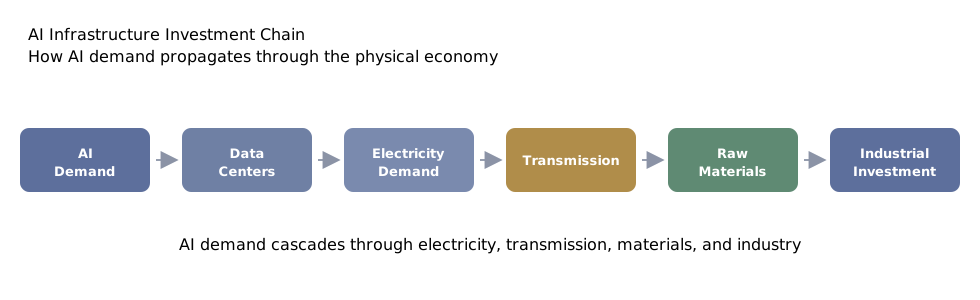
AI demand cascades through electricity, transmission, materials, and industry
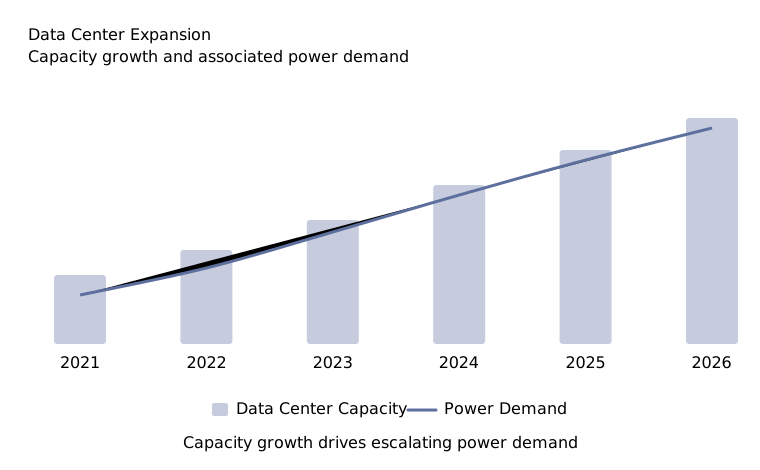
Capacity growth drives escalating power demand
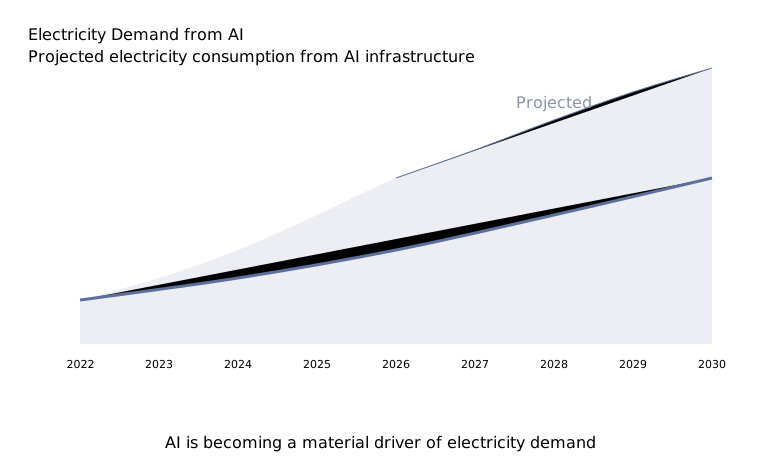
Electricity demand growth is broad-based across AI, electrification and reshoring
Energy Security Returns
Energy security remains a defining macro theme. Recent geopolitical developments have reminded policymakers that independence and supply resilience are critical priorities. Renewable investment continues to grow rapidly, but resilient systems require diversification rather than dependence on a single solution — natural gas, nuclear, renewables, battery storage, and transmission all play roles.
That makes for a more complex investment landscape than prior energy cycles. The challenge is no longer simply generating electricity, but generating reliable electricity at scale — and as AI infrastructure expands, reliable supply becomes a strategic economic asset.
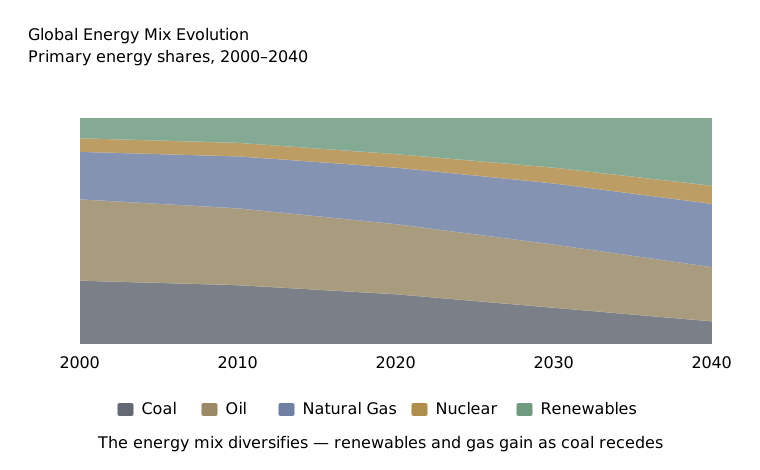
The energy mix diversifies — renewables and gas gain as coal recedes
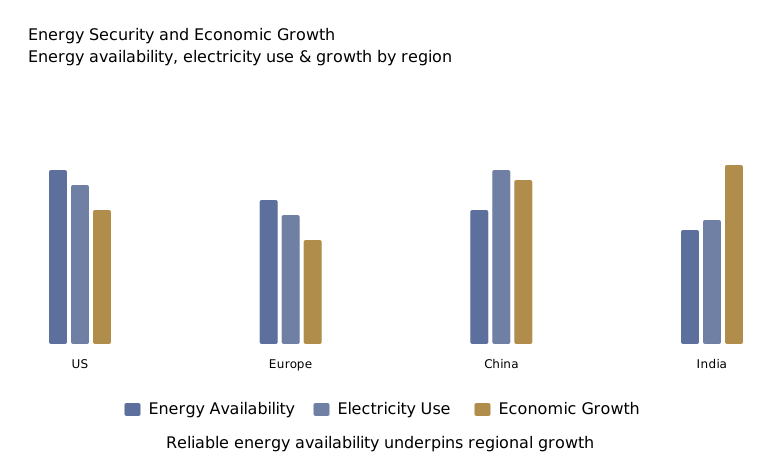
Reliable energy availability underpins regional growth
Monetary Policy and Market Expectations
Markets remain heavily influenced by rate expectations. Inflation has moderated from peak levels but uncertainty stays elevated, leaving markets sensitive to every release, inflation report, and central-bank communication. The challenge for policymakers is that growth remains positive while inflation pressures have not fully disappeared — an environment where policy mistakes become more costly.
Investors should remember that monetary policy operates with significant lags: markets react immediately, the real economy reacts slowly. That mismatch drives volatility and periodic repricing. Liquidity conditions therefore remain one of the most important indicators to monitor into the second half of 2026.
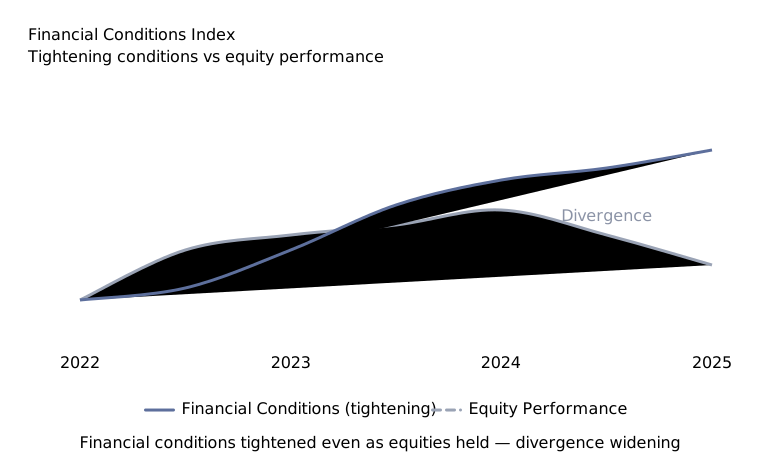
Financial conditions and liquidity remain the key variables to watch
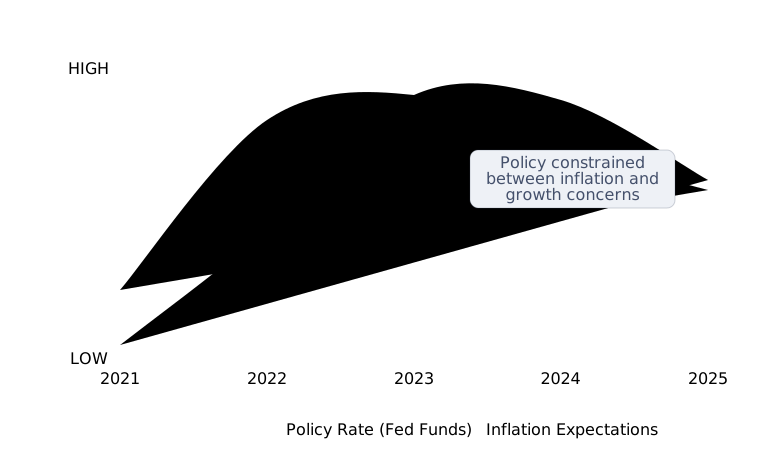
Policy rates and inflation expectations across major economies
Critical Materials Beyond Copper
Copper remains one of the most important strategic resources of the infrastructure cycle, but the transition extends beyond a single material. Aluminum is gaining importance in transmission and energy infrastructure; rare earths remain essential for advanced manufacturing, defense, and electrification; energy storage requires large quantities of specialized materials.
The next decade is likely to be defined by competition for critical inputs rather than shortages of ideas. The world has ample innovation; the challenge lies in supplying the physical resources to implement it.
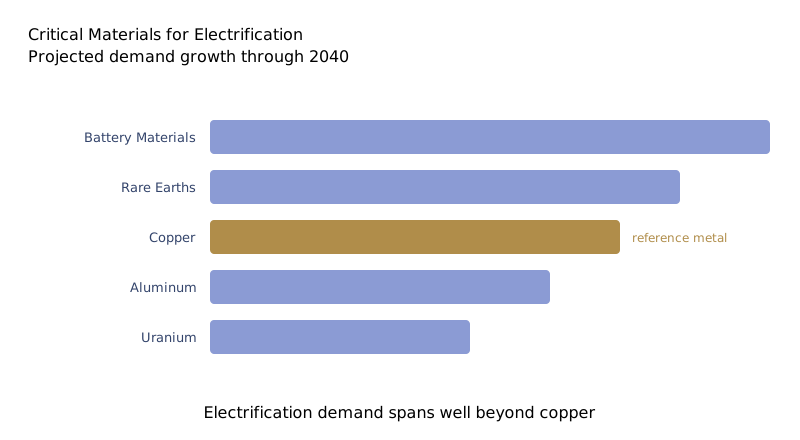
Electrification demand spans well beyond copper
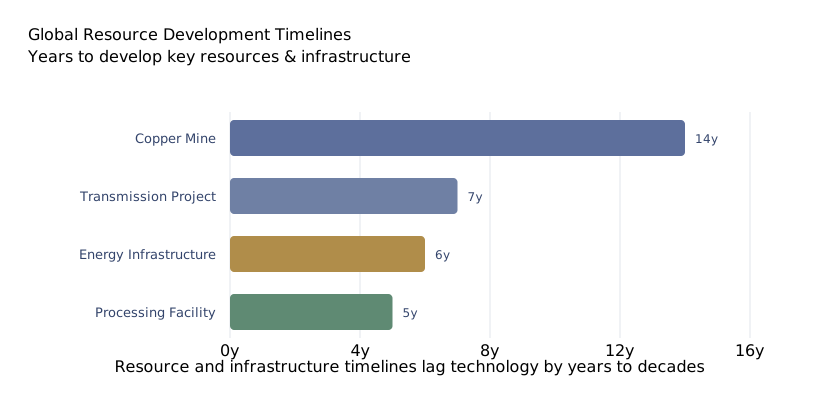
Resource and infrastructure timelines lag technology by years to decades
Forward-Looking Scenarios
- Base Case (50%) — resilient growth; AI-related investment continues expanding; infrastructure spending accelerates; inflation gradually moderates.
- Bull Case (25%) — energy prices stabilize; productivity gains accelerate; AI adoption expands faster than expected; liquidity conditions improve.
- Bear Case (25%) — geopolitical tensions intensify; energy markets face renewed disruption; infrastructure bottlenecks worsen; financial conditions tighten further.
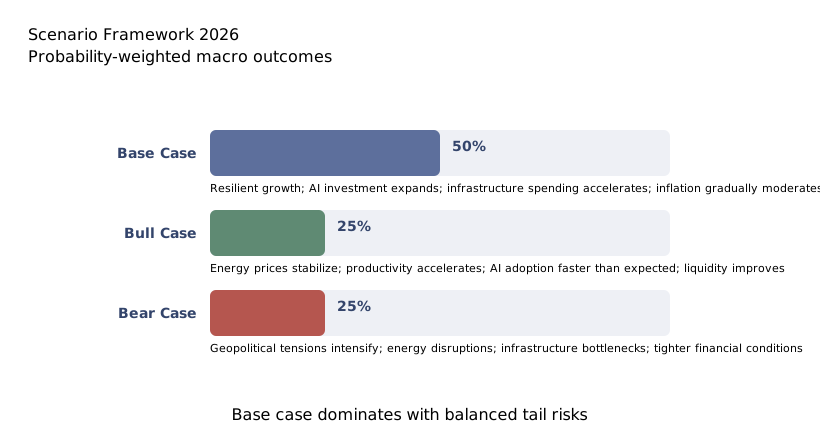
Base case dominates with balanced tail risks
Key Takeaways
- Market leadership is broadening beyond mega-cap technology companies.
- AI is evolving from a software story into an infrastructure story.
- Energy security remains a strategic priority for governments and businesses.
- Critical materials will play an increasingly important role in economic growth.
- Liquidity and financial conditions remain the key variables to monitor during the second half of 2026.