Why the First 100 Days Matter for Markets
Markets closely monitor the first 100 days of any new presidential term. This period establishes the administration’s priorities, reveals the gap between campaign rhetoric and governance reality, and sets expectations for the remainder of the term.
Executive power, however, is constrained by constitutional checks. Congress controls taxation and spending. The judiciary reviews executive actions. Administrative capacity limits implementation speed. These institutional frictions mean that even aggressive executive agendas face significant implementation constraints.
Market expectations often overshoot political reality in the early phases of a new administration. Initial enthusiasm or fear gives way to a more nuanced understanding of what is actually achievable within the system’s constraints. This recalibration creates both volatility and opportunity.
Personnel, Incentives & Policy Signals
Key appointments signal policy priorities more reliably than campaign rhetoric. Personnel choices reveal where the administration intends to focus energy, which constituencies it prioritizes, and how aggressively it will pursue its agenda.
Focus areas signaled by early appointments include:
- Immigration — enforcement-oriented appointments signal aggressive action.
- Deregulation — agency heads selected for rollback mandates across sectors.
- Fiscal policy — Treasury appointments indicate awareness of debt constraints.
- Energy — appointments favoring domestic production and reduced environmental friction.
The Treasury role is particularly central for market narratives. The Secretary shapes fiscal messaging, manages debt issuance, and influences expectations around growth, deficits, and dollar policy.
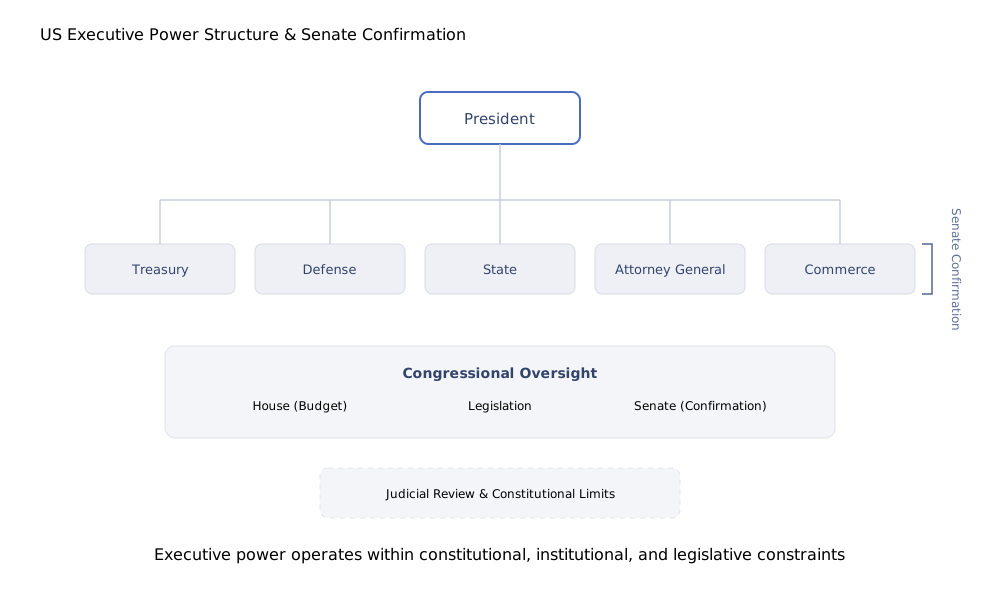
Executive power operates within constitutional, institutional, and legislative constraints
Executive Orders: Speed vs Limits
Executive orders are deployed aggressively early in a presidency to maximize immediate impact. They allow rapid action without Congressional negotiation, creating visible momentum and signaling intent to supporters.
However, executive action has inherent limits:
- Legal vulnerability — courts can block orders that exceed executive authority.
- Reversibility — future administrations can reverse orders with equal ease.
- Implementation gaps — agencies must execute orders, creating practical friction.
- Resource constraints — ambitious orders require funding and personnel.
Areas where executive action is most effective include regulatory interpretation, enforcement priorities, and foreign policy. Areas requiring legislative action — taxation, appropriations, entitlements — remain beyond executive reach.
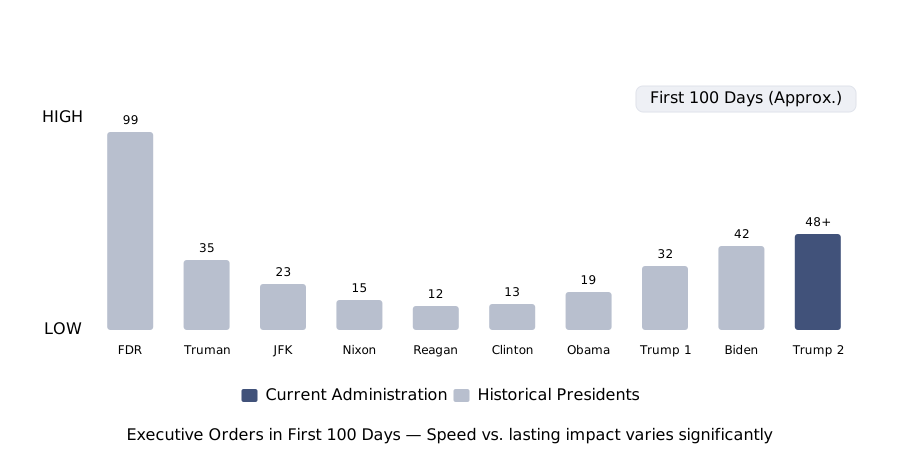
Executive Orders in First 100 Days — Speed varies, lasting impact varies significantly
Congress, Deficits & The Debt Constraint
Congress ultimately controls taxation, spending, and the debt ceiling. The power of the purse resides in the legislature, meaning significant fiscal changes require Congressional action — not merely executive preference.
Narrow majorities complicate fiscal reform. In the House, a handful of defections can block legislation. In the Senate, procedural rules constrain what can pass with simple majorities. Coalition management becomes as important as policy substance.
Structural constraints further limit fiscal flexibility:
- Demographics — aging population increases entitlement costs automatically.
- Mandatory spending — Social Security, Medicare, and interest dominate the budget.
- Refinancing needs — maturing debt must be rolled at prevailing rates.
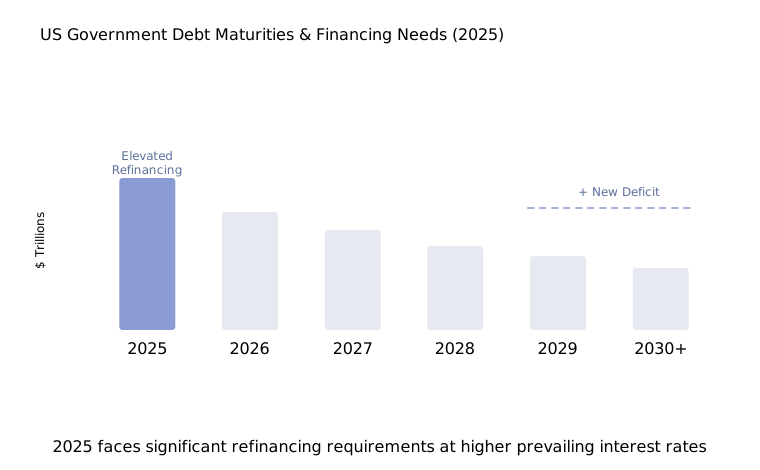
2025 faces significant refinancing requirements at higher prevailing interest rates
Inflation, Rates & Market Volatility
Policy uncertainty can increase both inflation expectations and rate volatility. Markets must price potential fiscal expansion, tariff impacts, and supply-side disruptions — all with significant uncertainty around timing and magnitude.
A notable divergence has emerged between equity volatility and bond market volatility. While equity markets have absorbed policy uncertainty with relative calm, bond markets exhibit persistent stress. This divergence reflects fixed income’s particular vulnerability to inflation surprises and fiscal sustainability concerns.
Bond markets often react more sensitively to fiscal signals than equity markets. Supply dynamics, duration risk, and inflation expectations create a different sensitivity profile. Monitoring bond volatility provides early warning of macro stress.
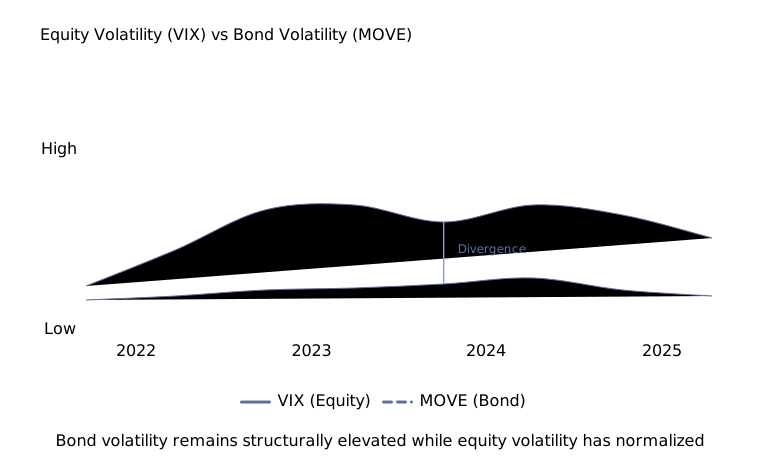
Bond volatility remains structurally elevated while equity volatility has normalized
Tax Policy, Incentives & Corporate Behavior
Tax policy affects investment decisions, profit margins, and risk appetite across the corporate sector. Lower effective rates, accelerated depreciation, and reduced regulatory burdens all influence capital allocation and hiring decisions.
Deregulation and fiscal incentives can support business confidence even when economic data remains mixed. The psychological component — what Keynes termed “animal spirits” — drives investment, risk-taking, and economic activity beyond what pure fundamentals suggest.
Channels for corporate activity reacceleration include:
- Margin expansion — lower compliance costs and improved pricing power.
- Capital return — buybacks and dividends as confidence improves.
- M&A activity — more permissive antitrust environment enables consolidation.
- IPO revival — improved conditions support new issuance.
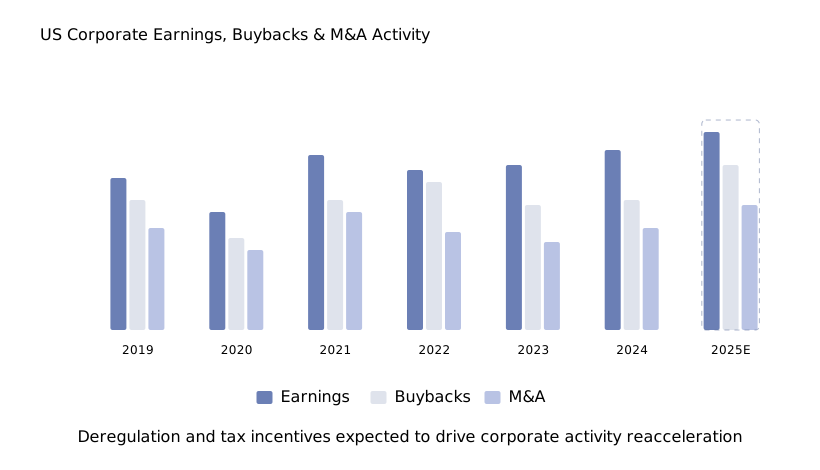
Deregulation and tax incentives expected to drive corporate activity reacceleration
Trade Policy & Geopolitical Realignment
Trade policy is increasingly used as a strategic tool beyond pure economic considerations. Tariffs serve multiple purposes: negotiating leverage, revenue generation, domestic political signaling, and industrial policy objectives.
The trend toward supply chain fragmentation and regionalization continues to reshape global trade patterns. Near-shoring, friend-shoring, and de-risking strategies are restructuring how goods and components move across borders.
Critical raw materials and industrial capacity have become central strategic variables. Control over rare earths, battery metals, and semiconductor supply chains provides leverage in geopolitical competition. Reducing dependency on concentrated sources is now a security imperative, not merely an economic preference.
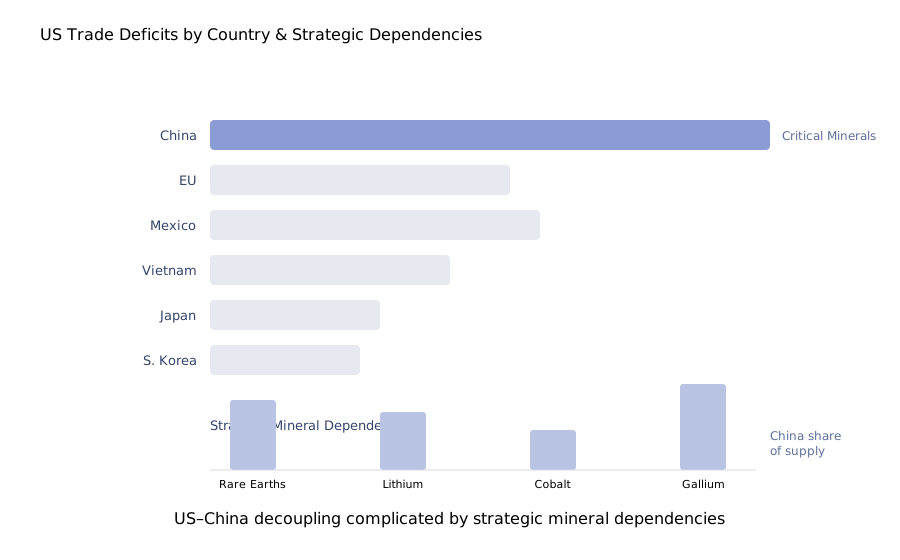
US-China decoupling complicated by strategic mineral dependencies
Second-Order Effects & Political Feedback Loops
Policy decisions often create unintended consequences that require subsequent policy responses. Tariffs may raise consumer prices, triggering political backlash. Deregulation may create localized problems that generate new regulatory demands.
Feedback loops between inflation, public opinion, and political pressure create dynamic policy environments. Rising prices erode approval ratings. Falling markets create pressure for intervention. These feedback mechanisms make policy paths difficult to predict from initial conditions alone.
Markets adapt to evolving policy narratives, repricing expectations as new information emerges. This adaptation process creates volatility but also opportunities for positioned capital to benefit from narrative shifts.
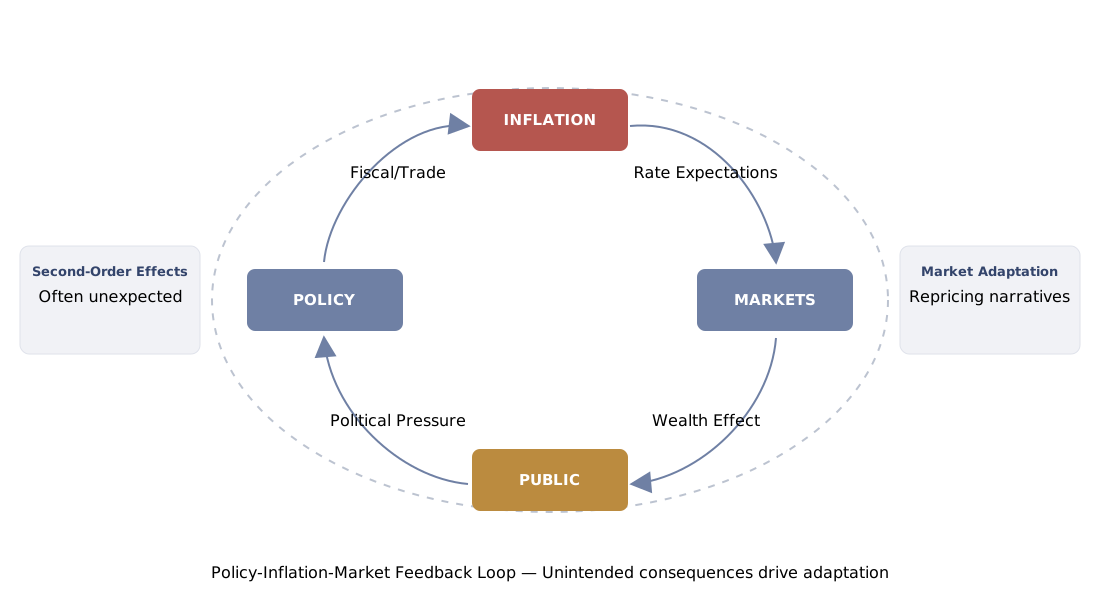
Feedback loops between policy, inflation, and markets create self-amplifying dynamics
Strategic Positioning Implications
Macro positioning considerations during this environment, without reference to specific assets or companies:
- Preference for pricing power and resilience — companies that can pass through cost increases and maintain margins outperform in inflationary environments.
- Awareness of rate and inflation sensitivity — duration-sensitive positions require careful monitoring as rate expectations shift.
- Use of volatility for disciplined rebalancing — price dislocations create opportunities for systematic adjustment rather than reactive trading.
- Diversification across regions and regimes — concentration risk increases when policy uncertainty is elevated.
- Maintaining liquidity flexibility — cash optionality becomes more valuable when opportunity sets expand during volatility.
Opportunities & Risks Summary
Opportunities:
- Deregulation-driven growth potential
- Domestic investment incentives
- Liquidity-supported risk phases
- Volatility-driven opportunity sets
Risks:
- Trade conflict escalation
- Inflation surprises
- Bond market stress
- Policy implementation gaps